
Stop Chasing Feedback, Try This (Dealing With Silent Clients)
Protect your cash and apply for this small biz grant before July is over!

hey freelancers!
When was the last time you got ghosted?
Getting ghosted before signing a proposal is bad enough, but getting ghosted mid-project? When you’ve already invested actual hours and brainpower into their business? That is a special kind of freelance torture.
I hear this story constantly.
You sign a brand-new client. The vibes on the discovery call were immaculate. They were enthusiastic, you were excited, and the project kicked off like a total dream. You put your head down, spend two weeks obsessively pouring your heart into their deliverables, and hand over the first draft or major wireframe.
Then… crickets. 🦗
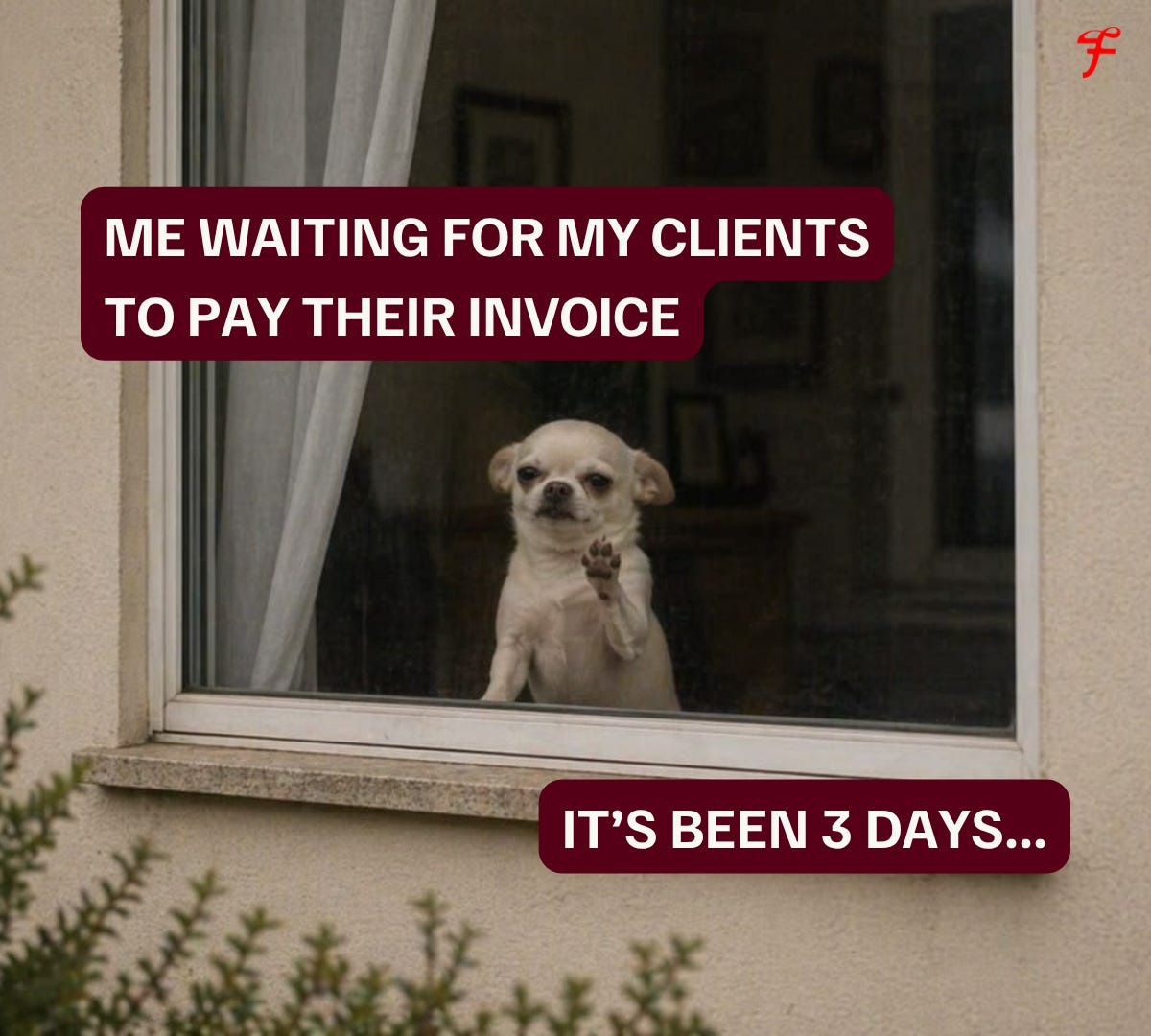
Day one of silence turns into day three. Day three turns into week two. You send a polite “Just checking in!” email. Nothing. You drop a casual ping in Slack. Read receipt, no reply. Suddenly, you’re left hanging in digital limbo, wondering if they hated your work, lost their internet connection, or somehow vanished off the face of the earth.
Meanwhile, your project timeline is completely derailed, your cash flow is frozen, and you’re wasting precious mental energy wondering if you should keep working or cut your losses.
The good news? Most clients don’t ghost because they’re evil masterminds trying to ruin your life. They ghost because they get overwhelmed, bogged down in their own corporate fires, or simply don’t have a clear system for keeping momentum going.
The even better news? You don’t have to just sit there and pray they reply. You can structure your business so that ghosting becomes virtually impossible (or at least financially harmless to you if it happens). Let’s look at how to build a ghost-proof client system.
The “Zero Leverage” Problem
Why do clients feel comfortable vanishing mid-project?
Because in traditional freelance setups, all the leverage stays with the client. If you work for weeks upfront without getting paid along the way, or if you rely on them to give feedback before you get your next payout, they hold all the cards. They know they can take three weeks to answer your email because their bank account isn’t hurting. Yours is.
To flip the script, you have to design your onboarding and billing structures so that momentum is attached to money. When a client has skin in the game at every single stage of the project, suddenly their response times get remarkably fast.
Ghost-Proofing Your Projects
1. Tie Your Cash Flow to Milestones (Not End Dates)
If your payment terms are “50% upfront, 50% upon completion,” you are setting yourself up for ghosting. If a client goes dark before “completion,” you are left holding the bag for all the work you did in the middle.
Switch to Milestone Payments. Break every project into 3 or 4 clear phases (e.g., Phase 1: Strategy & Discovery, Phase 2: First Draft, Phase 3: Revisions & Handover).
The Golden Rule: Work for Phase 2 does not start until the invoice for Phase 2 clears and Phase 1 feedback is officially approved. If they pause on you, your time and bank account are protected because you’ve already been paid for the work you just delivered.
2. Put a “Ghosting Clause” in Your Contracts
Yes, you need to literally spell out what happens if they vanish. If it’s in the contract they signed, it stops being a awkward personal debate and becomes a standard business protocol.
Add a Restart Fee Clause to your terms of service.
The Script to Include: “If client feedback or required assets are delayed by more than 14 business days without prior notice, the project will be officially paused and removed from the active queue. To resume work, a $250 Re-boarding Fee will apply, and the project will be rescheduled based on the Contractor’s current availability.”
Why it works: Nothing wakes up a quiet client faster than realizing their delay is about to cost them extra money and push their launch back by two months.
Every freelance project has a story.
Share your anonymous experience with GigNtell and help build a clearer picture of freelance work.
#partner
3. Set Up “Async” Feedback Barriers
Clients often ghost because reviewing a massive deliverable feels like an overwhelming, time-consuming chore. If you send them a 30-page PDF and say “let me know your thoughts!”, they will procrastinate reading it until Friday... and then until next week.
Make giving feedback as friction-free as possible. Record a 3-minute Loom video walking them through the draft, highlighting exactly what 2 or 3 specific questions you need them to answer.
The Tool: Use collaborative feedback tools like Loom, Figma, or Google Docs where they can just drop inline comments rather than typing out a novel of an email.
4. Deploy the “Assumption Close”
When you need approval on something low-risk to keep moving forward, don’t ask an open-ended question that requires them to sit down and compose a reply.
Give them a clear deadline with a default action built in.
The Script: “Hey [Name]! Attached is the draft for [Deliverable]. To keep us on track for our target launch date of the 25th, please drop any edits in the document by Thursday at 5:00 PM. If I don’t hear from you by then, I’ll assume this draft is fully approved and move right into Phase 2!”
Why it works: It shifts the burden of action off you and onto them. If they remain silent, the project keeps moving anyway!
Momentum is Money
Your time is valuable, your calendar is premium real estate, and you are running a real business. You do not have to hold project slots open indefinitely for clients who don’t respect your schedule.
By setting tight contractual boundaries, billing by milestone, and making feedback ridiculously easy, you show your clients that you are a structured, high-value professional. And if someone does still manage to vanish? Your bills are already paid, your contract is clear, and you can fill that open slot with a dream client who is ready to move.
You got this!! One email closer to the weekend,
Sara <3
🌷Fellow FF Caroline Fraissinet is starting a monthly group career coaching series, the first Tuesday of each month. Join here!
🎧 The best time to post on Instagram according to 9.6 million posts? Thursday and Wednesday apparently
💖Yadhoom Digital helps mission-driven organizations grow their impact through strategic digital marketing. They specialize in donor and supporter engagement, fundraising campaigns, email marketing, and data-driven insights that help nonprofits and mission-driven orgs better understand and optimize their supporter journeys.
📖Are you kidding me? this is the cutest mug I’ve ever seen. I need it yesterday.
🌸 FF Amanda Gann helps climate-conscious companies and mission-driven organizations translate complexity into clarity. August availability is open for select projects! Check out her work!!
🥥Grants to Apply to before July is Over! August grants up in the FF Funding Hub! (Use code SUBSTACK for 20% off) Here’s one: AT&T Small Business Contest Due: 7/31/26
Prize Package:
A $50,000 small business grant
A year of AT&T service with a new device
Mentorship resources geared towards making a local impact
The opportunity to share your small business story with your own AT&T content piece alongside She’s Connected talent
(4) runners-up will receive a $5,000 small business grant each.
🙌
It’s worse when they have a legitimate reason to have “ghosted” so you want to hold out for them out of empathy but at the same time you wonder what to do with their slot. Do you give it out to someone else or do you wait for them to come back because until then they have been a great client and you’d feel bad for them when/if they finally come back and they need you but their slot is gone?
Asking for a friend…