

hey FFs!
Have you ever been at that very specific, heartbreaking stage of client relationships that nobody warns you about in freelance orientation?
You’re working with a client you actually love. They’ve been on your roster for months, they pay their invoices on time, and up until now, working together has been a total dream.
Then, out of nowhere, they drop a brand-new idea into your shared Slack channel.
Maybe they want to completely strip out the high-converting checkout flow you built and replace it with a clunky, five-step quiz. Maybe they want to rewrite their best-performing ad copy to sound like a 1990s law firm memo. Or maybe they’re insisting on launching a massive campaign in three days without testing any of the tech first.
Your expert brain instantly flashes red warning lights. You pull together the data, put on your most professional tone, and write a thoughtful, diplomatic message explaining why this choice is going to tank their conversion rates, burn their budget, or confuse their customers. You even propose two alternative solutions that achieve their goal without breaking everything.
And their response?
“Thanks so much for the input, Sara! We hear you, but we’ve decided to go ahead with this direction anyway. Can you have it ready by Friday?”
Suddenly, you’re standing at a bizarre crossroads. You care about the quality of the work, you care about their business results, and your creative pride is screaming at you to fight harder. But at the same time... you are exhausted.
So how do you handle watching a great client make a blatantly bad decision without losing your mind, burning the relationship down, or taking the eventual fallout personally?
The Hard Shift: Partner vs. Decision Maker
Here is the hardest truth about running a service-based freelance business: You are the advisor, but the client is the executive.
When you are deeply passionate about your craft, it is ridiculously easy to fall into the trap of feeling like the work belongs to you. But at the end of the day, it is their business, their risk, and their budget to burn.
Your job as an expert consultant is to give them the best possible information, highlight the risks, and present strategic alternatives. Once you have done that clearly and professionally, you have fulfilled 100% of your contractual obligation.
If they choose to ignore your map and drive straight into a ditch anyway? That is their choice to make. You are not responsible for saving people from their own decisions after you’ve handed them the life vest.

You Warned Them!! How to Let Go Without Losing Your Mind
When a good client insists on making a bad call, handle it like a high-value professional.
1. Protect Your Professional Reputation and Send the “Paper Trail” Email
When the campaign inevitably underperforms or the new feature breaks, you need to make sure the blame doesn’t land on your shoulders six weeks from now.
How? Put your diplomatic pushback in writing—once, clearly, and documented.
Example Script:
“Thanks for confirming the direction, [Client Name]! I’ve noted that we’re proceeding with [Their Decision]. As discussed, my primary concern with this approach is [Brief Risk, e.g., a potential dip in mobile checkout conversions]. However, I respect your final call and our team will execute this according to your timeline! Let’s monitor the analytics closely post-launch so we can pivot if needed.”
Why? It’s polite, professional, and firmly establishes that you foresaw the risk without sounding like a petty “I told you so.”
2. Detach with Professional Love
Once the paper trail is signed off, mentally disengage from the emotional outcome.
Try it: Stop spending your evening hours lying awake in bed trying to figure out how to save them from themselves. Execute the work to the absolute best of your technical ability within their requested constraints, deliver it on time, and log off.
Rule: You cannot care more about a client’s business than the client cares about it themselves. Channel that protective, creative energy back into your own business instead!
3. Reclaim Your Time & Energy
When a client project starts taking extra mental cycles because of messy, stubborn client demands, you cannot afford to waste another second on manual, frustrating back-end admin in your own business.
Your Next Move: Systemize your business backend so that client friction doesn’t bleed into your marketing or calendar management.
2 DAYS LEFT: To help you build a bulletproof system that keeps your business running smoothly no matter what your clients are doing, we are hosting an exclusive live workshop with Rella, the project management and content platform built specifically for freelancers!
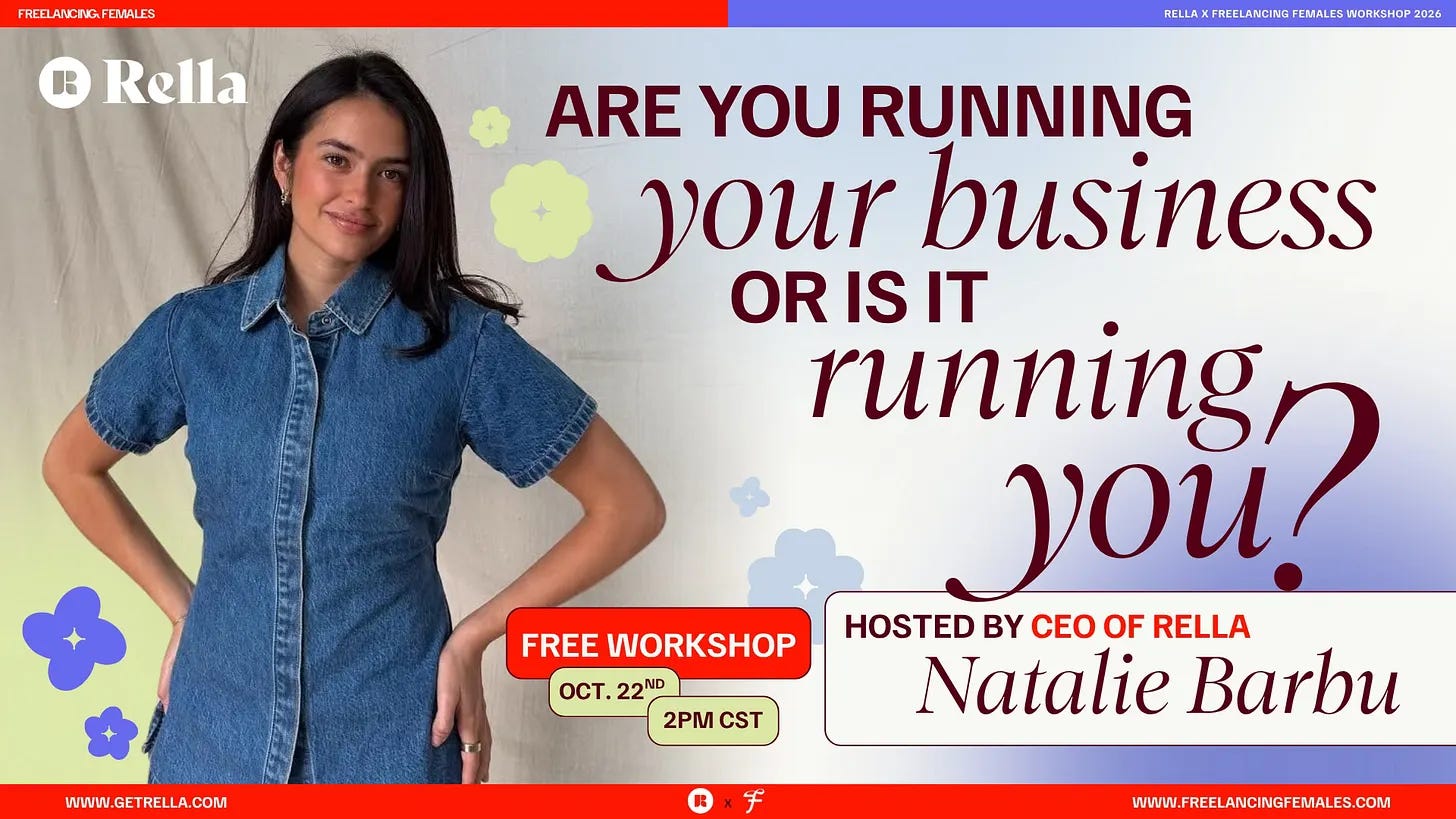
We’re diving deep into how to get your time back as a freelancer marketing your own business. We’ll show you how to streamline your operations, organize your client workflows, and automate your self-promotion so you always stay in control of your time. Learn more about this free event here!
4. Be Prepared for the “Pivot Proposal” (Turn their Mistake into Income)
When a client’s bad decision inevitably fails, they will usually come back to you a month later asking for help fixing it.
How? Do NOT lecture them or say “I warned you.” Approach the rescue mission with total grace, warmth, and a fresh project scope!
Example Script:
“I saw those post-launch conversion numbers drop and it’s a bummer that the experiment didn’t hit the mark! The good news is we can easily revert back to our original strategic framework or build out Option B. I’ve put together a quick 1-week optimization sprint proposal to fix this for you!”
The Outcome: You look like a heroic, calm leader, and you get paid twice—once to build their bad idea, and once to fix it!
From Flob to Fab
Even the absolute best clients will occasionally insist on doing things the hard way. It doesn’t mean they’re bad people, and it doesn’t mean you failed as a freelancer.
Offer your best advice, document your recommendations, execute their final choice with grace, and protect your own energy. Your job is to guide the boat—not force the captain to steer where you want to go.
Protect your peace!
Sara 🧸

🍒2 days left to RSVP for FREE!! Grab your free seat at our hands-on workshop with Rella and Natalie Barbu to take back your weekends and build a marketing system that actually works for you. Stop spending hours on marketing that leaves you burnt out.
🍎AHH! With Halloween coming up these are so calling my name
🍷Shop small! Caitlin Kerr shares a weekly guide on businesses worth knowing for Heart Be Your Guide and we’re big fans over here!!! Check it ooout!
🐞 OooO have you read this book? Just added it to my TBR “Build the Damn Thing” by Kathryn Finney
🎻Got something to share? Freelancing Females Community Ads are your spotlight to showcase gigs, events, offers, launches, or big ideas with our global network of freelancers.
🎧 October Grants in the FF Funding Hub! Here’s one:
Breva Thrive Grant: Build what’s next. Contractors and trade subcontractors can put this quarterly funding toward the tools, team, or systems that will help them win more work and scale with confidence.
💵 $5,000 📅 Due: October 31, 2026 🔗 Apply: breva.ai/thrive-grant
Love love love this reminder. It’s easy to get caught up in client mess and decisions… after all we want the best for them. But it’s important as a freelancer not to feel obliged to absorb the mess of those we help!
“Protect Your Professional Reputation and Send the “Paper Trail” Email” —> 10/10. Paper trials are a must.
One line I'd add to the paper-trail email, because it turns "let's monitor" into something both sides agreed to before anyone knows the result:
"So we're judging it on the same thing: we'll look at [metric, e.g. mobile checkout conversion], currently [baseline], on [date, 2–3 weeks after launch]. If it's below [number], switching back to the previous version would take about [time] and cost [price]. I'll hold that quote until [date]."
Why it helps: the check date and the number are set while everyone is calm, so the later conversation is about a figure, not about who was right. And the paid fix is already priced and on record, so if they want to revert it's a quick yes, not a fresh negotiation, and it doesn't feel like you're charging them for your "I told you so."